

The Three Inward Traits of Vision
By Brandon Briscoe
The Christian faith has a way of awakening us to a persistent thought: what am I doing with my life that truly matters? We instinctively know that we were made for more than routine, more than survival, and more than simply getting through the week. We want our lives to carry eternal weight. We want to know that what we are doing today is connected to something that will last beyond us.
When we open the Bible, we see people whose lives clearly had a transcendent purpose. Lives that broke from the monotony and with great clarity intersected with the purposes of God. As we read their stories, we watch as God works through normal people to accomplish his will, advance his mission, and build his kingdom. Yet for many believers, there remains a frustrating gap. We understand the New Testament mission in a general sense, but we struggle to see how it connects to our personal lives. The mission feels grand and inspiring, but it can also feel distant and abstract — removed from the ordinary decisions we make every day.
That gap that we feel, may be the result of a lack of vision. Vision is what connects where you are now to what God is calling you toward. It gives clarity to your decisions, direction to your efforts, and purpose to your life. But vision is frequently misunderstood. We tend to think of it as something that arrives fully formed: a sudden realization, a burst of clarity, or a detailed plan for the future. In Scripture, however, vision rarely begins that way. Before it ever takes shape in the outward direction of a person’s life, it must first take root in the inward life of the heart.
“Before it (vision) ever takes shape in the outward direction of a person’s life, it must first take root in the inward life of the heart. ”
The life of Nehemiah provides a clear picture of how this happens. When we first encounter Nehemiah, he was not a grand visionary leader or an engineering wizard. He was a cupbearer to the king of Persia, a position of trust and proximity to power. He lived in relative comfort and stability, far removed from the ruins of Jerusalem. But everything changed when he received a report about the condition of his people. The walls of Jerusalem were still broken down, the gates burned, and the people living in distress. What might have been, for someone else, a passing concern became for Nehemiah something much deeper. It became his greatest conviction. Scripture tells us that he sat down and wept, mourning for days, fasting and praying before God.
Nehemiah 1:4 And it came to pass, when I heard these words, that I sat down and wept, and mourned [certain] days, and fasted, and prayed before the God of heaven,
This moment reveals something foundational about vision: it begins with a burden. Nehemiah did not start with a strategy or a plan. He did not immediately move into action. He was first overcome with grief. The need he observed settled into his heart and would not leave. This is often how God begins to form vision in a person’s life. Many people can see a need, but not everyone is burdened by it. When a need begins to weigh on your heart, when it lingers in your thoughts and impacts your prayers, it may be more than awareness — it may be the beginning of calling.
Throughout Scripture, this pattern repeats itself. Moses was burdened by the oppression of Israel (Exo 2:11-12). David was stirred by the dishonor brought against the name of God by Goliath (1 Sam 17:26). Jeremiah spoke of a fire within him that he could not contain (Jer 20:9). Paul carried a constant burden for the churches (2 Cor 11:28). In each case, vision did not begin with clarity or excitement, but with conviction and, often, with grief. There is a kind of holy sorrow that God uses to awaken our purpose. It forces a person to wrestle with the cost, to feel the weight of what is broken, and to consider whether they are willing to carry that burden over time.
Yet not every burden produces vision. The nature of the burden matters. If your deepest concerns are rooted in personal comfort, ambition, or temporary circumstances, then you will never give birth to anything of lasting spiritual value. But when your burden is connected to God’s mission — his people, his glory, his purposes — it becomes the kind of burden that can shape your entire life. Nehemiah was not merely upset about a wall; he was grieved by what that broken wall represented. It hindered the restoration of God’s people and stood as a visible sign that something was out of alignment with God’s objectives.

“…when your burden is connected to God’s mission—his people, his glory, his purposes—it becomes the kind of burden that can shape your entire life. ”
As Nehemiah carried this burden, he turned to God in prayer. But what unfolds in that prayer is just as important as the burden itself. He begins not with requests, but with reverence. He acknowledges God as great and holy, a keeper of covenant and mercy. In doing so, Nehemiah is immediately confronted with his own smallness. The weight of the need does not lead him to confidence in himself, but to humility before God. This introduces another essential aspect of how vision is formed: it grows in the soil of reverent fear.
Nehemiah 1:5 And said, I beseech thee, O LORD God of heaven, the great and terrible God, that keepeth covenant and mercy for them that love him and observe his commandments:
This kind of fear is not about terror in the ordinary sense, but about a deep awareness of who God is and who we are in relation to him. It strips away self-reliance and replaces it with dependence. When we begin to consider what God might do through our lives, there is often a temptation to manufacture confidence, to convince ourselves that we are capable. But in Scripture, those whom God uses are those who also recognize their own insufficiency. Moses questioned his ability (Exo 3:5-11). David marveled that God would choose him at all (2 Sam 7:18; Ps 25:14). Jeremiah felt ineffectual because of his youth (Jer 1:6). Paul described himself as weak, trembling before the task set before him (Act 9:6; 2 Cor 5:11).
This broken posture of fear before God is not a barrier to vision; it is a prerequisite for it. Scripture tells us that the secret of the Lord is with those who fear him. God reveals his purposes not to the self-assured, but to the humble. Before a person can see where God is leading, they must first see themselves rightly. Before they can see afar off, they must bow down. Reverence positions the heart to receive direction. It quiets the impulse to control and opens the way for God to lead.

“…fear before God is not a barrier to vision; it is a prerequisite for it.”
As Nehemiah continues in prayer, something even deeper becomes evident. His burden and his reverence do not lead to a single moment of prayer, but to an ongoing pattern of communion with God. He prays day and night. He confesses sin: not only his own, but that of his people. He recalls the promises of God and aligns his requests with God’s word. What is forming here is not just a response to a problem, but a relationship.
Nehemiah 1:6 Let thine ear now be attentive, and thine eyes open, that thou mayest hear the prayer of thy servant, which I pray before thee now, day and night, for the children of Israel thy servants, and confess the sins of the children of Israel, which we have sinned against thee: both I and my father's house have sinned.
This is where vision truly begins to take shape. It is formed not merely through burden or humility, but through abiding. Nehemiah does not develop vision by stepping away from God to figure things out; he develops it by staying with God. In that place of continual fellowship, clarity emerges. His desires become aligned with God’s purposes, and his understanding deepens.
This pattern echoes throughout Scripture. Moses’ leadership was sustained by his ongoing relationship with God, speaking with him as a man speaks with a friend (Exo 33:11). David’s strength flowed from his desire to dwell in the presence of the Lord (Ps 27:4). Jeremiah found joy and endurance in the word of God (Jer 15:16). Paul described his life not as self-directed, but as Christ living in him (Gal 2:20). In each case, the effectiveness of their outward ministry was directly tied to the depth of their inward relationship with God.
Jesus himself makes this connection unmistakable…
John 15:5 I am the vine, ye [are] the branches: He that abideth in me, and I in him, the same bringeth forth much fruit: for without me ye can do nothing.
That includes the ability to discern and carry out God’s purpose for our lives. Vision is not something we construct; it is something that grows out of connection to Christ. Without that connection, even the best intentions will lack clarity and power.

“Vision is not something we construct; it is something that grows out of connection to Christ. ”
This has significant implications for how we think about purpose and leadership. Many people are eager to find direction for their lives. They want to know what to do, where to go, and how to make an impact. But the biblical pattern suggests that the better question is not “what should I do?” but “what is happening in me?” Before God entrusts someone with outward responsibility, he shapes inward conviction. Before he clarifies our direction, he deepens our dependence.
When we look back at Nehemiah’s story, it is tempting to focus on the outcome. He eventually leads the rebuilding of Jerusalem’s walls in an astonishing fifty-two days. He navigates opposition, organizes people, and accomplishes something remarkable. But none of that began with a "good plan.” It began with a burden that broke his heart, a reverence that humbled his spirit, and a relationship that rooted his life.
The same principle applies to us. If we desire vision — if we want to lead well, to live purposefully, and to make an impact that aligns with God’s mission — we must give attention to the inward work that produces it. Vision is not achieved by striving outwardly, but by being formed inwardly.
In the natural world, outward transformation is always the result of something happening within. A tree produces fruit because life is flowing through it. A butterfly emerges because transformation has taken place inside the chrysalis. In the same way, a life of purpose and clarity emerges from a heart that has been shaped by God.
For believers who long to lead, to influence others, and to live with intentionality, this truth is both challenging and encouraging. It is challenging because it calls us away from shortcuts and quick fixes. It reminds us that there is no substitute for a heart that is burdened by what burdens God, humbled before his greatness, and rooted in ongoing fellowship with him. But it is also deeply encouraging, because it means that vision is not something we have to manufacture. It is something God produces in us as are faithful where we are at and as we walk with him.
If you find yourself unsure of your direction, resist the urge to force yourself into a quick solution. Instead, ask him to align your heart with his mission. Commit yourself to abiding in him through his word and through prayer. Allow him to awaken a burden inside you.
As those inward convictions take root, vision will follow. It may not come all at once, and it may not look the way you expect, but it will come in a way that meets the needs of God’s mission.
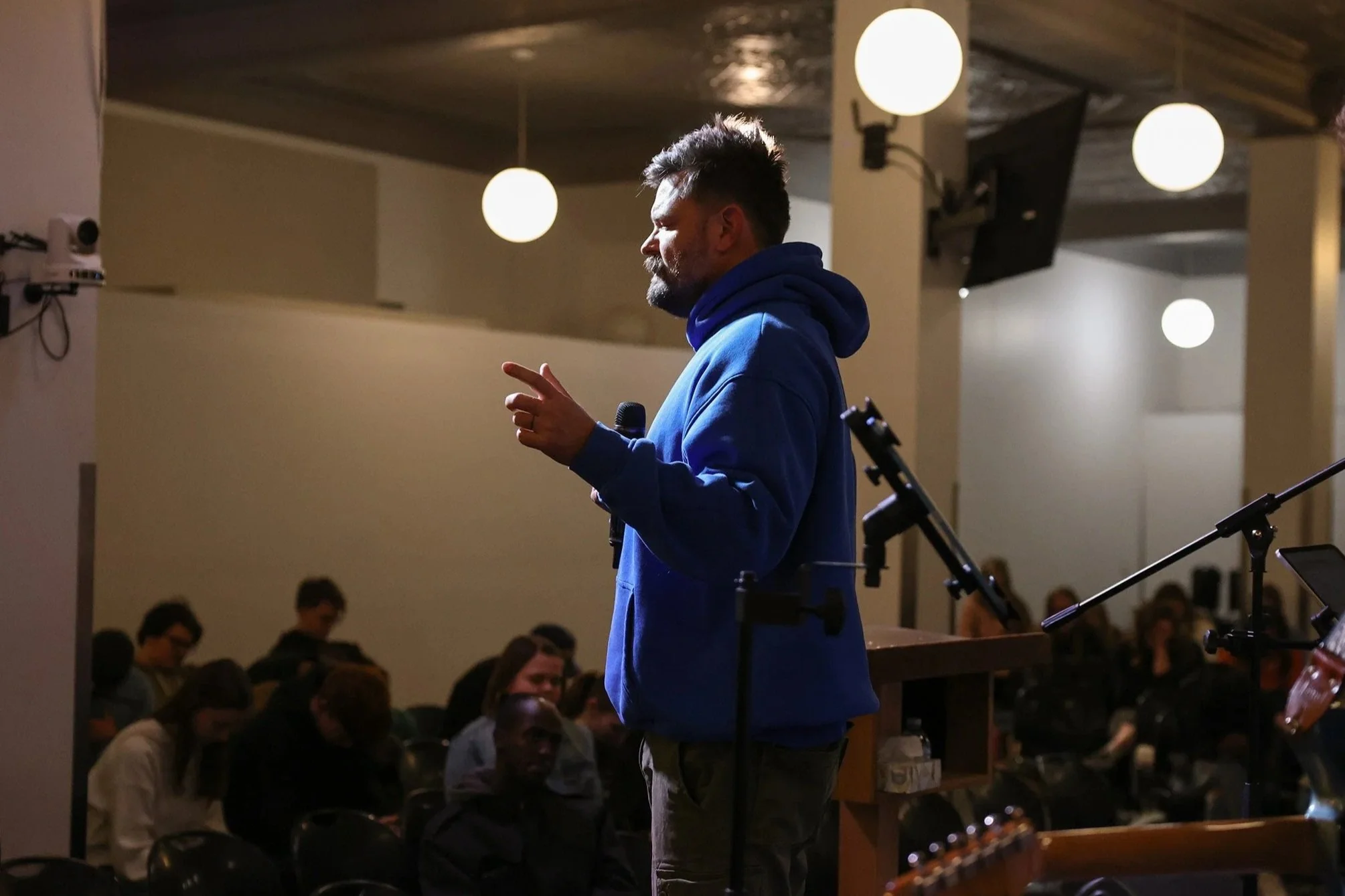
Brandon Briscoe is the pastor of the College and Young Adults Ministry at Midtown Baptist Temple and the provost of the Living Faith Bible Institute.